Memberships
From the first invitation to active membership, keep the next step clear.
Explore memberships ↗Operations software for makerspaces
Memberships, machine bookings, classes and reporting. Bring the work of running your makerspace together, so your community can get back to creating.
Equipment calendar
When memberships live in one spreadsheet and bookings in another, your team becomes the connection. MakerOps brings those everyday workflows into one place.
From the first invitation to active membership, keep the next step clear.
Explore memberships ↗Make room for member projects, training and scheduled maintenance.
Explore equipment booking ↗Turn operational activity into a clearer conversation with your team.
Explore reporting ↗A look inside
The product’s join screen separates creating a space from joining one. A member’s next steps continue through membership and billing before equipment use.
This is an actual automated-test screenshot using a simulated environment. It shows the join interface; it is not evidence of a live customer deployment.
View the full product screen ↗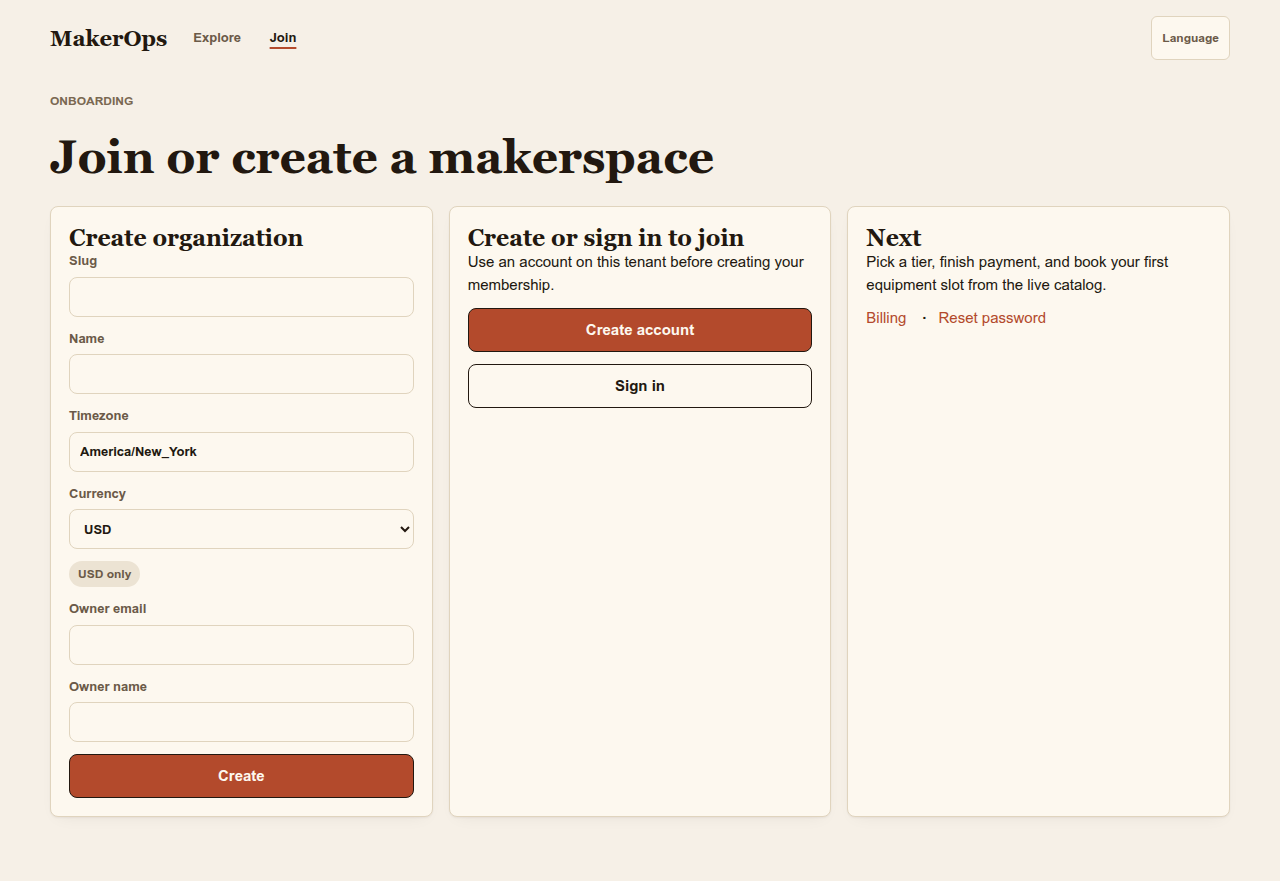
A practical starting point
Tell us about your members, machines and current tools. We can discuss whether a pilot fits your space.
How a pilot conversation works ↗Start with the task that takes too much time.
Check the requirements that matter to your space.
Confirm costs, data handling and responsibilities in writing.